Ophthalmic branch
Forehead, scalp and area around the eye.
Trigeminal neuralgia specialist care in Amritsar
Dr Bhavneet Singh provides focused evaluation for trigeminal neuralgia and a stepwise plan—from medicines to image-guided procedures such as radiofrequency treatment when clinically appropriate.
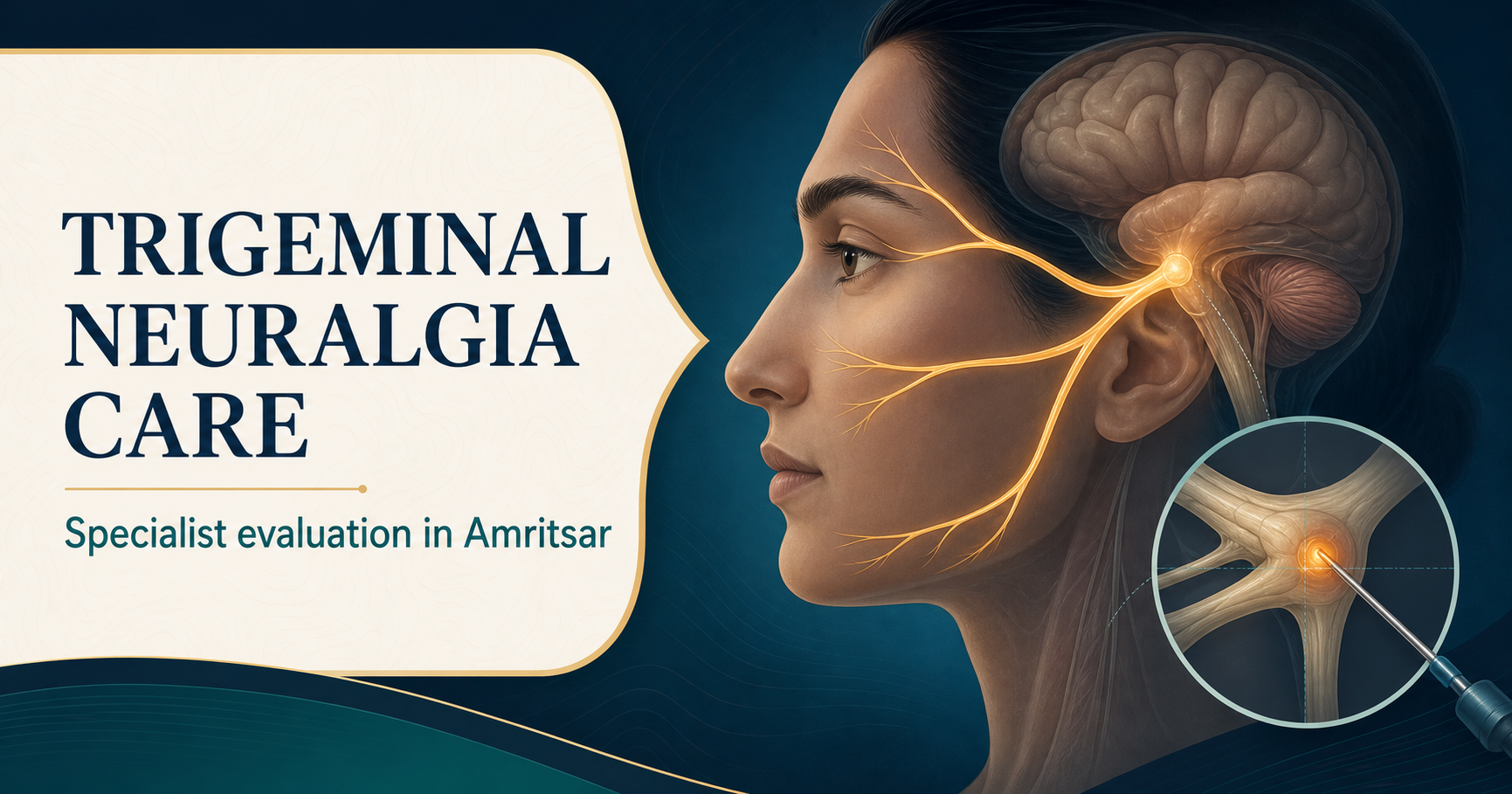
Hindi + English patient guide
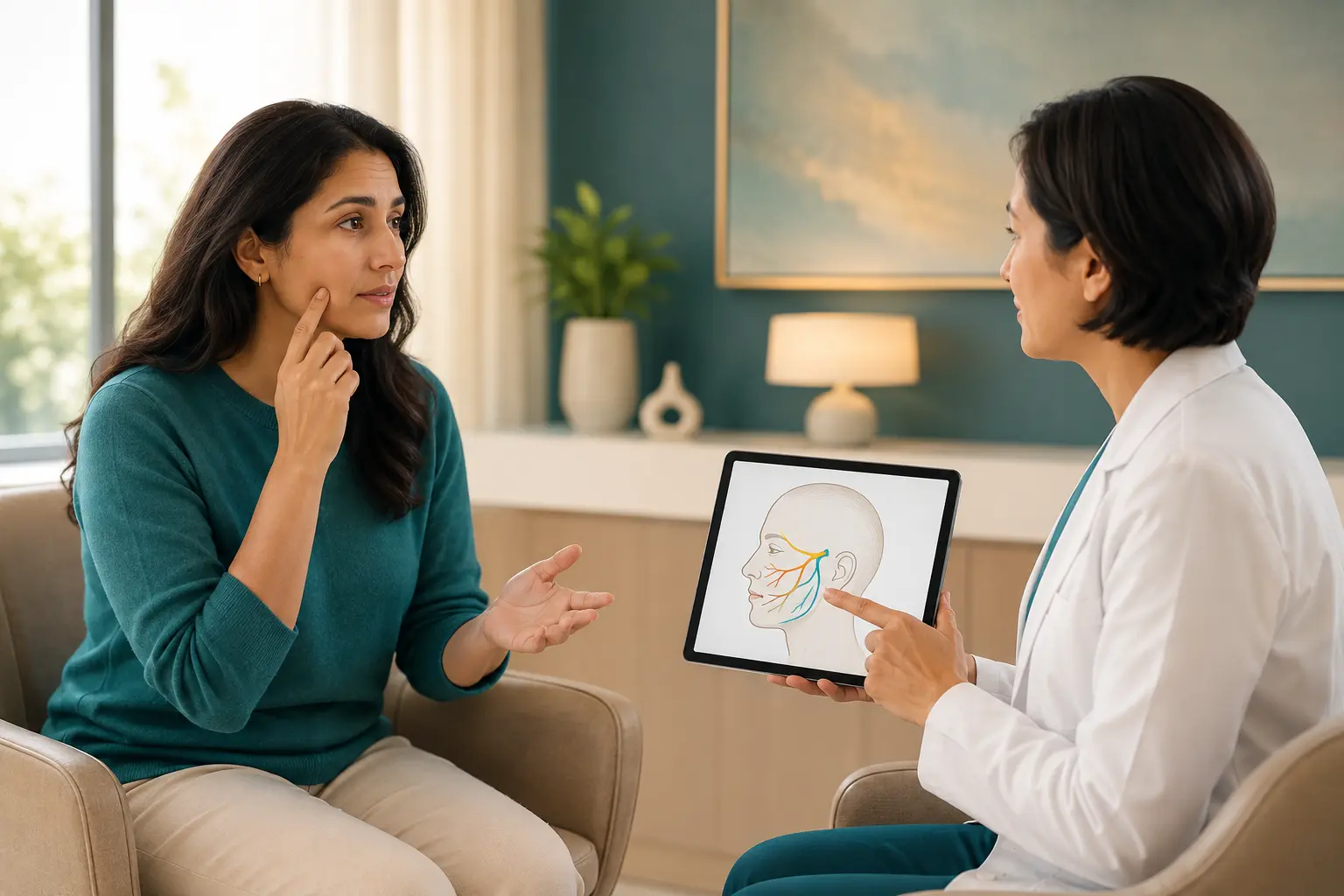
Watch how the V1, V2 and V3 branches relate to facial pain, which everyday activities can trigger attacks, and when specialist treatment may be considered.
What is trigeminal neuralgia?
The trigeminal nerve carries feeling from the face to the brain. In classical trigeminal neuralgia, a nearby blood vessel may press on the nerve near the brainstem and damage its protective covering, allowing pain signals to misfire.
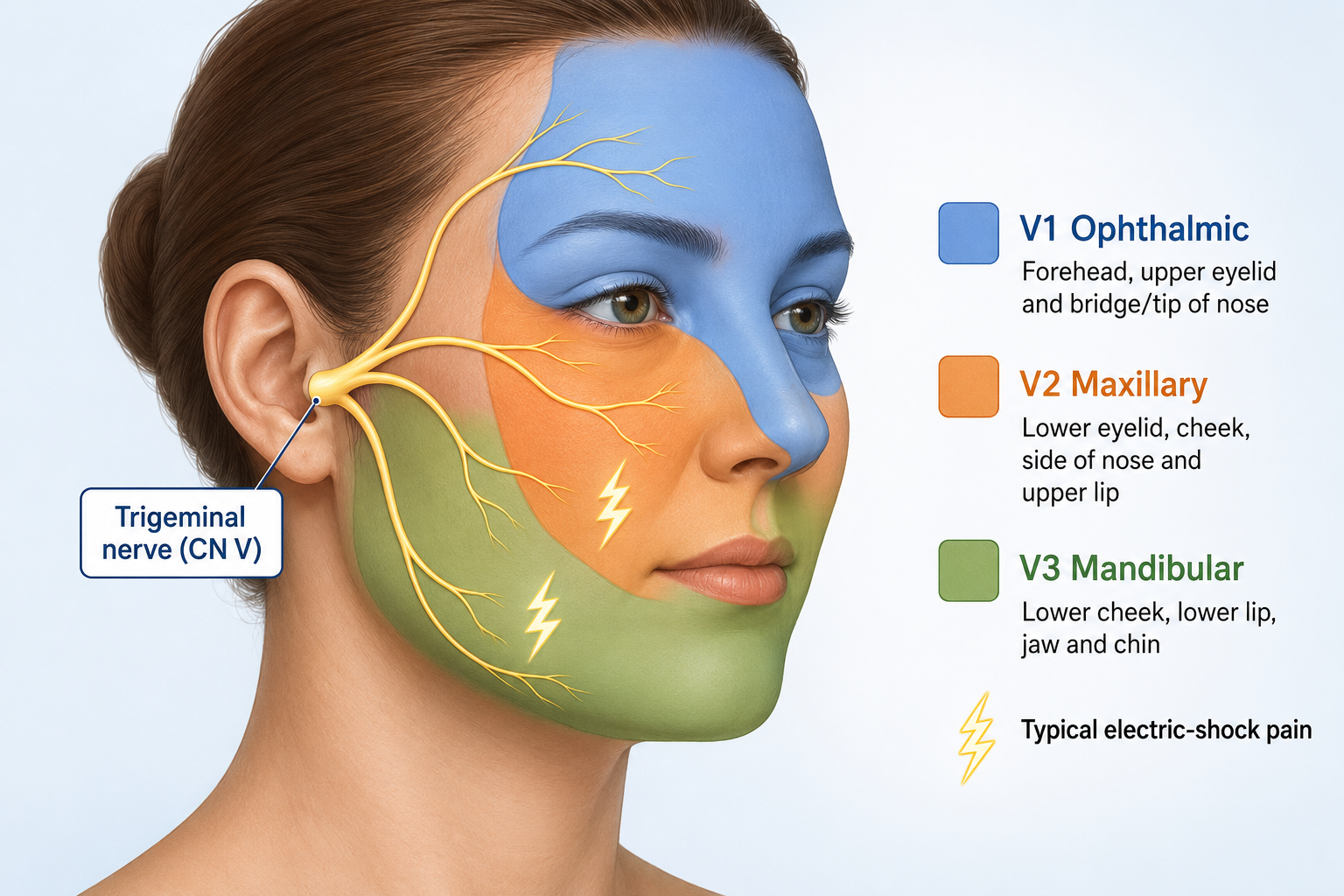
Forehead, scalp and area around the eye.
Cheek, upper lip, upper teeth and side of the nose.
Lower jaw, lower lip and part of the tongue.

Everyday triggers
Treatment options
Dental pain, sinus disease, migraine and other nerve conditions can sometimes resemble trigeminal neuralgia. Assessment may include a neurological examination, review of medicines and MRI when indicated.
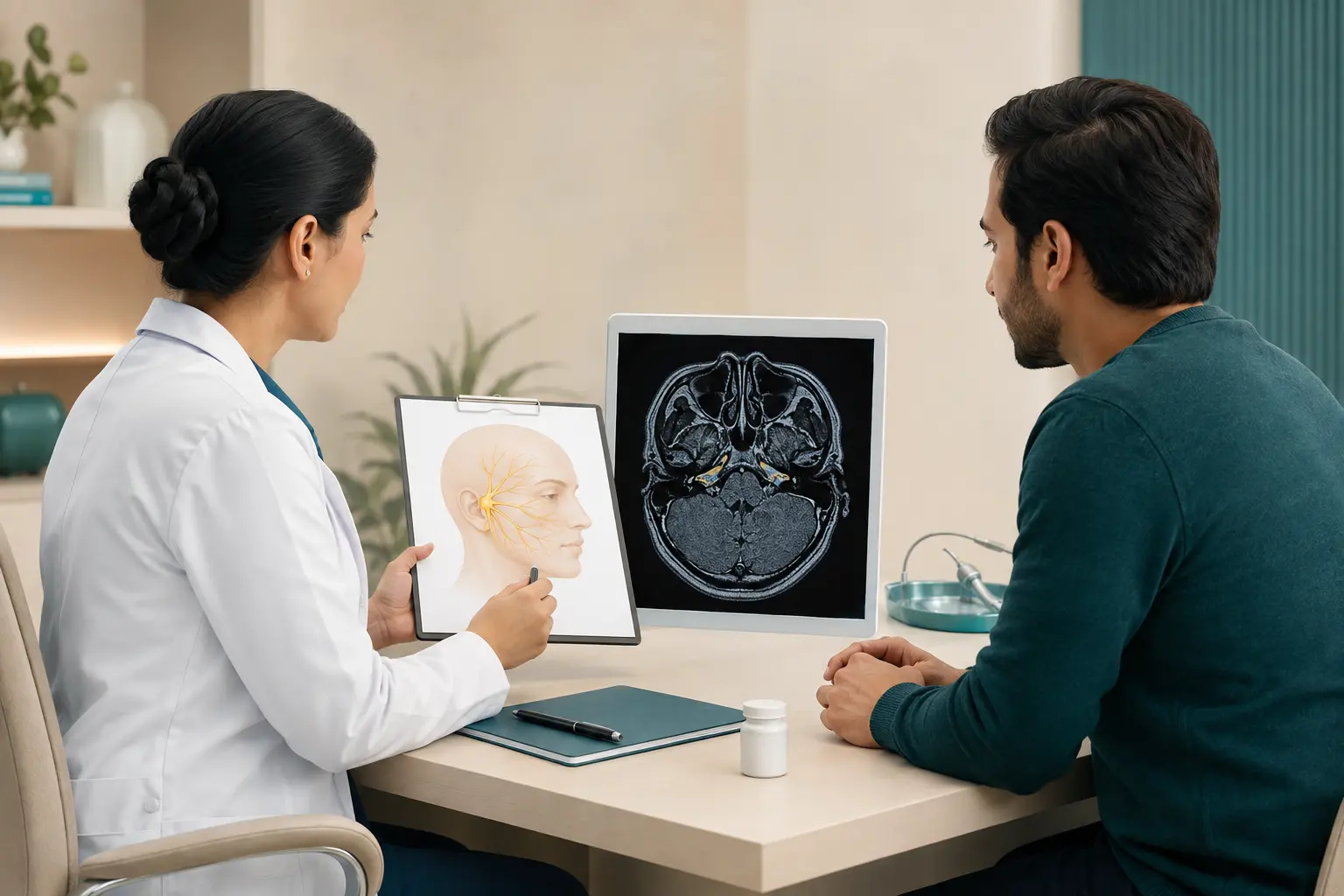
Medicine choices are tailored to each patient after clinical assessment. Doses and side effects need clinical supervision.
Nerve blocks or radiofrequency procedures may be discussed when medicines are ineffective, unsuitable or poorly tolerated.
Microvascular decompression, balloon compression or stereotactic radiosurgery may suit particular patients.
Focused procedure
A fine needle is guided through the cheek toward the trigeminal (Gasserian) ganglion. Sensory testing helps identify the pain-carrying branch. Controlled radiofrequency energy then reduces its ability to transmit pain.
Potential benefit and limits: the procedure may reduce facial-pain attacks in appropriately selected patients, but it is not a guaranteed or permanent cure. Pain can recur and further treatment may be needed.
Sensation and consent: numbness or altered facial sensation can occur because the treatment changes pain-signal transmission. The expected benefit, alternatives and individual risks must be discussed after assessment and before informed consent.
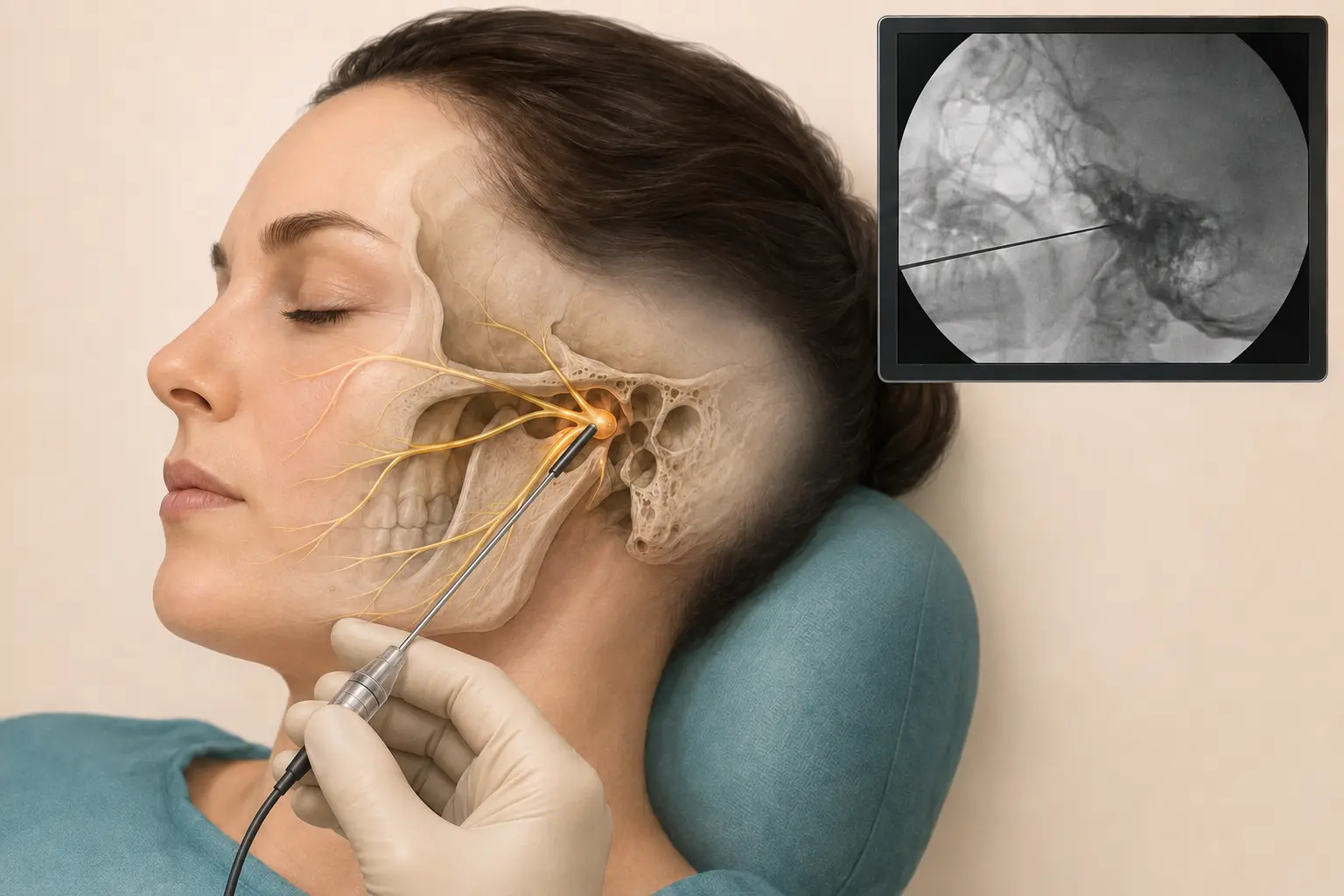
Confirm the diagnosis, branch involved, imaging and medicine history.
Guide the needle toward the ganglion under imaging.
Use sensory stimulation to match the painful facial area.
Apply controlled energy and review comfort and sensation.
What does the data show?
Good medical decisions need both the upside and the limits. These links open the original PubMed records so patients can review the evidence directly.

Immediate success across the major branch groups studied; pain-free duration differed by the divisions involved.
Open the study ↗Meta-analysis · 6,391 patients18 studiesThis analysis compared pain relief, recurrence and complications across several procedures for trigeminal neuralgia.
Open the meta-analysis ↗Systematic review · 5 trialsRCT evidenceBoth peripheral and ganglion radiofrequency approaches were effective; outcomes and side-effect patterns differed.
Open the review ↗Study results describe groups, not a promise of an individual outcome. Suitability and expected benefit depend on diagnosis, nerve division, prior treatment and overall health.

Your pain physician
MBBS, MD Anaesthesia
Punjab Medical Council Registration No. 46489
Focused assessment for facial pain, clear explanation of the diagnosis, medicine optimisation and minimally invasive pain procedures when appropriate.
Quick answers
No. Dental, sinus, jaw-joint, migraine and other nerve conditions can look similar. A careful history and examination matter.
An MRI is often considered to look for vascular compression and to exclude other causes. The decision depends on your symptoms and prior imaging.
It can provide meaningful relief, but pain may recur over time. It intentionally changes sensation in the treated branch and requires an individual risk–benefit discussion.
Bring prescriptions, MRI reports or discs, dental records if relevant, a medicine list and notes about triggers, attack duration and the exact facial area affected.
Yes. Online consultations are available for suitable cases. Send an enquiry on WhatsApp to arrange an appointment and share any relevant records.
A pain physician or neurologist can assess the facial-pain pattern, review medicines and arrange appropriate imaging or referral. Dr Bhavneet Singh provides pain-medicine assessment at Amritsar Pain Spine & Arthritis Centre in Putlighar.
Appointments in Amritsar
Send a short WhatsApp message with the affected side, pain area, triggers, duration and current medicines.

GT Road, Near Railway Workshop
Putlighar, Amritsar, Punjab – 143001